
Debt Consolidation for Credit Cards in New Zealand — How It Actually Works

Debt consolidation for credit cards is one of the most common reasons Kiwis come to us. You’ve got two or three cards, each with a different interest rate, different due dates, and different minimum payments — and the moment you miss one, the penalties start stacking. The idea behind consolidation is straightforward: you take out a single loan at a lower interest rate, use it to clear every card balance at once, and then focus on one repayment each week or fortnight. No more juggling. No more late fees. Just one payment you can actually keep track of.
If you’re one of these Kiwis, then you’ve probably heard of debt consolidation for credit cards. Like any financial decision, though, it’s important to weigh the pros and cons. In this guide, we’ll break down how to consolidate debt and what to consider before applying.
What is Debt Consolidation?
Debt consolidation is combining all your existing debts into one manageable loan. Instead of juggling multiple debt repayments with different due dates and interest rates, you’ll have just one monthly payment to worry about.
When you refinance expensive credit card debt, personal loans, or overdrafts into a lending product with a lower interest rate, you could reduce monthly payments and save thousands over time.
Learn more: What is Debt Consolidation and Why Consider it
What Debts Can You Consolidate?
Unfortunately, you can’t apply for a debt consolidation loan for everything. It only works on unsecured personal debt, such as:
- Store cards and credit cards
- Personal loans
- Overdrafts
- Hire purchase agreements
Debts Not Advisable for Consolidation Loans
Secured debts are tied to specific assets, like your home or your car. Besides, mortgage interest rates are lower than unsecured debt. Plus, the asset serves as collateral, which means different terms and conditions apply.
- Student loans
- Mortgages
- Car loans (in most cases)
An Example of How to Consolidate Debt Effectively
Now you know what debt consolidation means, but what does it look like applied to the average Kiwi? Here’s an example.
Meet Sarah, a 29-year-old marketing coordinator from Auckland. She’s been carrying multiple debts with high interest rates that are eating into her budget each month.
Sarah’s current debts:
- Credit card: $6,800 at 19.5% interest
- Personal loan for home improvements: $5,200 at 16% interest
- Overdraft facility: $1,300 at 21% interest
- Medical payment plan: $1,200 at 15% interest
That’s four different payments, four different due dates, and a total of $14,500 in high-interest debt. By taking out a debt consolidation loan at a lower interest of 12%, Sarah simplifies her finances into one loan and saves thousands in interest charges. If you’re not sure where your money is going each month, our budgeting guide can help you get a clear picture before you consolidate.

Is there Anything Special about a Debt Consolidation Loan?
No, it’s just a new loan that’s large enough to cover all or part of your existing loans. You borrow money, use it to pay off all your smaller debts with a higher interest rate, then focus on repaying this one new loan.
Like any loan, approval isn’t guaranteed. You’ll need to demonstrate to lenders that you can handle the responsibility. Talk to your lender about realistic loan repayment interest rates and timelines.
Now comes the critical part that many people overlook. Debt management via consolidation only works if you resist the temptation to spend. It’s like clearing out a cluttered garage only to fill it with more stuff. You’ll end up back where you started, but potentially in worse shape
Your Guide to Eliminating Higher-Interest Debt via Debt Consolidation
Getting the right loan amount isn’t guesswork, it’s about being honest with your numbers. Here’s a step-by-step roadmap to consolidate your debts into a single loan:
Step 1: Add Up Your Target Debts
List all the debt you have in the first place, along with the current interest rates. This will show you which loans are best suited for consolidation. Then calculate how much you need to borrow by totaling all the loans and credit card debt you want to consolidate. This is the total amount you need to borrow
Step 2: Determine How Much You can Pay Each Month
Don’t fall into the trap of overestimating your repayment ability. That’s how many people got into debt in the first place.
Look at your bank statements and see how much is left after covering your essential expenses. Don’t include the debts you’re consolidating. This amount is your ‘free cash flow.’
Divide the total loan amount by this free cash flow figure to see how many months you’d need to repay the loan.
Step 3: Build in Your Safety Buffer
Life has a way of throwing curveballs. Multiply your estimated repayment period from the previous step by 1.5 to account for interest costs and unexpected expenses. This buffer gives you breathing room so you’re not struggling to make payments in the event of an emergency.
Step 4: Find the Lowest Interest Rate
The interest rate determines how much the loan costs you. Even a difference of 2-3% can save you thousands over the life of your debt consolidation loan. Interest rates vary based on your credit history, and the bank or lender, so shop around and compare offers. A personal loan is often the most straightforward option for consolidation.
Does Debt Consolidation Impact Your Credit Score?
Think of your credit score as your financial reputation. Every loan, missed payment, or new credit card affects how lenders see you. Consolidating your debts into one manageable loan can help tidy up that reputation. But only if you continue to make good on payments and get out of debt. If your credit score is low, you may want to explore bad credit loans as an alternative.
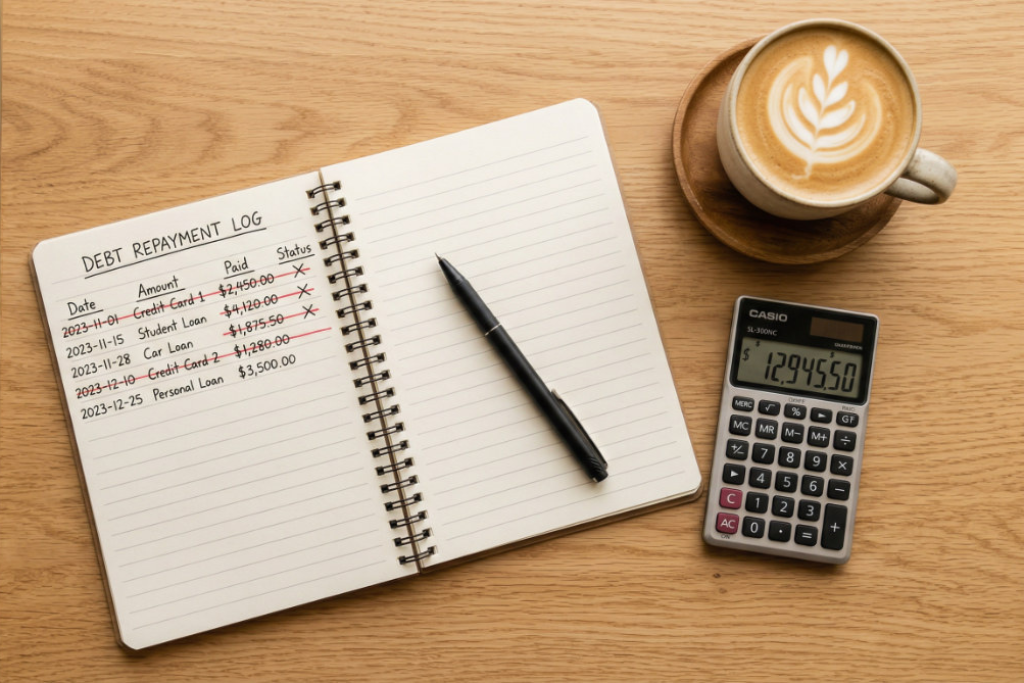
In New Zealand, your credit information is tracked by three agencies: Centrix, Equifax, and Illion. These agencies get notified when you miss repayments or open new lines of credit. Here’s how debt consolidation can affect your score:
How Debt Consolidation Loans Affect Your Credit Report
- Fewer open debts: Paying off multiple accounts and closing them reduces your total number of credit lines.
- On-time repayments: A single monthly repayment is easier to manage, which may help you avoid missed payments.
- Shows financial responsibility: Consolidating and repaying debt shows lenders that you’re serious about getting your finances in order.
Risks and Cons of Debt Consolidation
While debt consolidation can make managing your finances easier, it’s not without its risks. Because you’re replacing multiple debts with a single loan, often over a longer loan term. You could end up paying more in the long run if you’re not careful.
Hidden fees, unfavourable terms, or slipping back into old spending habits can quickly undo the benefits. That’s why it’s important to go in with your eyes open and a solid plan.
1. Unexpected Fees
Some lenders may charge additional costs that aren’t always obvious upfront:
- Application or establishment fees
- Ongoing account or service fees
- Charges for late or missed payments
Always read the fee schedule and ask your lender for a full breakdown of costs before you apply. Debt consolidation can make existing debts cheaper but only if you’re not bogged down by little hidden fees.
One example of a debt consolidation strategy that people misuse is a balance transfer credit card. These often have an interest-free period of 1 to 2 years, which is great. The thing though is the no-interest clause only applies to the consolidated debt you transferred to the card, not on new purchases.
New purchases on a balance transfer credit card are charged the standard interest rates, which is about 19% p.a. to 25% p.a.
2. Longer Repayment Terms = More Interest
Consolidation loans often give you the option to repay over a longer period. While this can reduce your monthly repayments, it may also mean you’ll pay much more in interest over time.
Choose a repayment term that balances affordability with speed. The faster you can repay the loan without straining your budget, the less interest you’ll pay overall.
Learn more: Frequently asked questions about consolidation loans
3. Early Repayment Penalties
Want to make extra payments on your debt consolidation loan? You might be surprised to find some lenders charge you for doing so.
Look for lenders who allow extra or early repayments without penalty. This gives you flexibility to pay off the loan faster if circumstances allow.
Done Right, Debt Consolidation Can Save You Money
Debt consolidation isn’t a one-size-fits-all solution, but for many New Zealanders, it can be a helpful step toward regaining control of their finances. Just make sure you understand the terms and avoid taking on new debt.

Ready to Get Your Credit Card Debt Under Control?
If you’re juggling multiple cards and the balances aren’t going down, consolidation might be the reset you need. Use our loan calculator to see what your repayments would look like with everything rolled into one. Applications take about 6 minutes, and we’ll come back to you within the hour during business hours.
Apply now → https://alternatefinance.co.nz/online-application-form/
Common Questions About Credit Card Consolidation
Q: Can I consolidate credit card debt if I have bad credit in NZ?
A: It depends on the full picture, not just the score. If you’ve got a patchy credit history but stable income and some form of security, consolidation may still be an option. We look at your ability to make the new repayments — not just what Centrix says about the past. That said, if your credit file shows multiple recent defaults with no recovery, it does make approval harder. The first step is to check your credit score for free at centrix.co.nz and then talk to us about where you stand.
Q: How much could I save by consolidating my credit card debt?
A: It varies, but the savings usually come from two places: a lower interest rate and the elimination of late payment penalties. If you’re currently paying 20–25% on credit cards and consolidate into a loan at 12–15%, the difference over 24–36 months adds up to hundreds — sometimes thousands. Use our loan calculator to get a specific estimate.
Q: Will consolidating my credit cards hurt my credit score?
A: In the short term, applying for any new loan triggers a credit enquiry, which can cause a small, temporary dip. But once your credit card balances are paid to zero and you’re making consistent repayments on the consolidation loan, your score typically improves. The key is to not run the cards back up once they’re cleared.
Q: Can I still use my credit cards after consolidating?
A: Technically, yes — your cards are still open unless you close them. But this is where most people come unstuck. Our advice: keep one card for genuine emergencies, reduce the limit to the minimum, and set the others to $0 or close them entirely.
Q: What’s the minimum amount of debt worth consolidating?
A: There’s no hard minimum, but consolidation makes the most sense when you’ve got at least two or three debts with different interest rates and repayment schedules. If you’ve only got $1,500 on a single card, just focus on paying it down directly.

Subscribe to our Blog
Related Posts
Latest Posts



Alternate Finance
Online Loans NZ Wide - Quick Personal Cash Loans
Alternate Finance offers instant cash loans NZ wide and is an established and trusted local money lender with active charitable undertakings.