Credit Cards vs Personal Loans – Which Is Better in New Zealand?
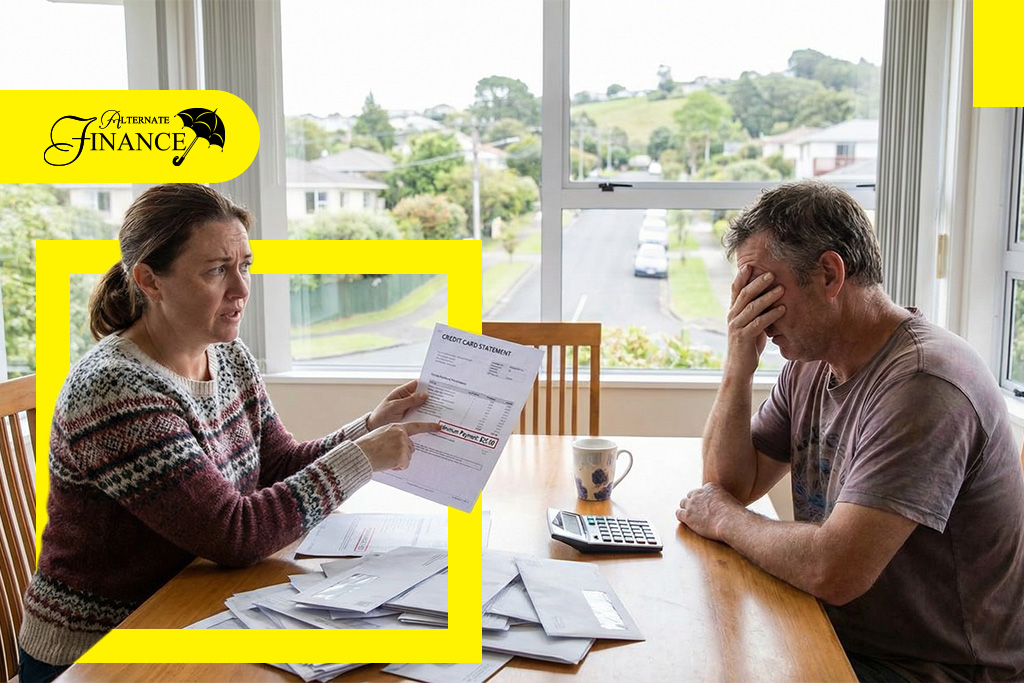
If you need to borrow money, it’s common to weigh up using a credit card versus taking out a personal loan with a private lender. While both can provide access to funds, they work very differently, and choosing the wrong option can end up costing more and dragging debt out longer than expected.
Within this blog, you’ll find a clear comparison to help you decide which option is better for your situation.
How credit cards work
A credit card gives you access to a revolving credit limit. You can borrow, repay, and borrow again up to that limit.
They’re designed for:
- Everyday spending
- Short-term purchases
- Small or irregular expenses
While credit cards are convenient, they often come with high interest rates, such as 20.95% and minimum repayments. A higher interest rate can make it easy for debt to linger for years.
How personal loans work
A personal loan provides a lump sum upfront, which you repay in fixed instalments over a set period, and often at a lower interest rate.
They’re designed for:
- Planned expenses
- Larger one-off costs
- Consolidating existing debt
Personal loans offer more structure, clearer costs, and a defined end date, without escalating costs, assuming you make the loan repayments. Private lenders may value the relationship with the borrower more than a bank might, as a bank is a corporate machine, whereas a private lender is often a small business and values repeat custom.
Credit cards or personal loans? Here’s a side-by-side comparison
| Feature | Personal Loan | Credit Card |
| Repayments | Fixed, predictable | Minimum repayments vary |
| Interest rate | Usually lower | Usually higher |
| End date | Yes | No fixed end date |
| Cost clarity | Known upfront | Easy to lose track |
| Best for larger expenses | Yes | Limited by card limit |
| Budgeting control | High | Lower |
| Risk of long-term debt | Lower | Higher |
| Credit score impact | Can improve if repaid on time | Can suffer if balance stays high |
When a personal loan usually makes more sense
A personal loan is often the better option if:
- You’re covering a larger planned expense, such as car repairs, medical costs, or a major purchase
- You want certainty around repayments and total cost
- You prefer a clear payoff date, rather than open-ended debt
- You’re looking to consolidate credit card balances or other debts into one structured repayment
- You want borrowing that’s easier to budget for month to month
For many New Zealanders, this structure helps avoid the trap of making minimum repayments while interest keeps accumulating.
When a credit card may be suitable
A credit card can still make sense if:
- The amount is small and short-term
- You’re confident you’ll repay the full balance quickly
- You value flexibility for day-to-day spending
- You’re using interest-free periods responsibly and maintaining good credit
Problems usually arise when credit cards are used for larger costs or relied on long term. You need to determine your reliability around making repayments before using a credit card.
A simple rule of thumb
- Planned expense = Personal loan
- Small, short-term spend = Credit card
- Existing card debt = Consider consolidating into a personal loan
When considering loans vs credit cards, the goal is to match the loan structure to how the money will actually be used.

Choosing the right option
Before applying, it’s worth asking yourself, or seek advice from your lending team:
- How long will I realistically need to repay this?
- Do I want fixed repayments or ongoing flexibility?
- What’s the true total cost over time?
Understanding this upfront, before you are approved for the loan or credit facility can prevent unnecessary interest, stress, and repeat borrowing.
Stress is a big factor to consider. If you’re consistently not meeting your obligations, it’s likely that you’ll be called by a collection agency, which not only takes time, but can become an emotional journey that will affect you in all aspects of life. Credit cards are not a good option if you’re not highly organised with managing your money.
Example credit-card borrowing
This example shows how borrowing on a credit card compares with taking a personal loan for the same NZD amount. Assumptions are illustrative; so please check current offers from NZ banks, private lenders and credit unions for exact rates and fees. Rates may also vary, depending on your credit score, but will be confirmed prior to your finance agreement commencing.
Scenario
- Amount needed: $2,500
- Option A – Credit card: interest rate 19.95% p.a., annual fee $75, credit limit $5,000, minimum payment 3% of balance or $10 (whichever is greater), interest accrues daily on unpaid balance.
- Option B – Personal loan: fixed-rate unsecured loan 9.95% p.a., 3-year term (36 months), no early repayment fee for this example, establishment fee $0 (varies by lender).
Calculations (rounded)
Option A – Credit card (carry $2,500 balance, make only minimum payments)
If you make just the minimum payment of 3% each month, the monthly payment starts at $75 (3% of $2,500). Because the minimum falls as the balance reduces and interest is high, repayment can take many years and cost a lot in interest. Approximate outcome if you make only 3% min payments and rates remain 19.95%:
- Starting monthly payment: $75
- Estimated time to repay: ~7–8 years (varies with exact minimum calculation and interest compounding)
- Total interest paid: roughly $1,600–$1,900
- Total cost (principal + interest + annual fee over period): ~ $4,200–$4,500
Option B – Personal loan (fixed 36 months at 9.95%)
Fixed monthly repayment for a $2,500 loan at 9.95% p.a. over 36 months:
- Monthly repayment: approximately $79.70
- Total repayments over 36 months: $2,869.20
- Total interest paid: approximately $369.20
Side-by-side summary
| Feature | Credit card (example) | Personal loan (example) |
| Interest rate | 19.95% p.a. (variable) | 9.95% p.a. (fixed) |
| Monthly payment | Starts $75 (3% min), decreases slowly | $79.70 fixed |
| Repayment term | Varies — often many years if only min paid | 36 months |
| Total interest (approx.) | $1,600–$1,900 | $369.20 |
| Total cost | ~$4,200–$4,500 (including fees) | $2,869.20 |
Key takeaways for NZ borrowers
- Credit cards are convenient for short-term borrowing or purchases you can repay quickly. High rates mean carrying a balance is expensive.
- For a set amount you need to repay over a few years, a personal loan with a fixed rate usually gives lower monthly interest and a predictable term.
- Compare APR/effective interest, fees (annual, establishment), repayment flexibility, and any early repayment penalties from NZ lenders before deciding.
Who a credit card is NOT a good idea for
Credit cards can be useful short-term tools, but they are not suitable for every New Zealander. If any of the following describe you, a credit card may make your financial situation worse. Be honest with yourself, because money-stress is something that can spiral and be life damaging. Below you’ll find a list of points, and if you identify with any of these, think twice about having a credit card:
- You regularly carry a balance month-to-month. NZ credit card interest rates are typically high, so repeatedly paying only the minimum can lead to large interest charges and slow progress repaying debt.
- You struggle to stick to a budget or control impulse spending. The easy access to revolving credit makes overspending more likely and can lead to persistent debt.
- Your income is irregular or unstable. If you can’t reliably make at least the minimum repayments, you risk late fees, penalty interest and negative marks on your credit record in New Zealand.
- You plan to borrow for a large, fixed-cost purchase long-term. A personal loan or hire-purchase often has lower rates and fixed repayments that are easier to budget than a credit card used as long-term finance.
- You are close to or over your credit limit. Maxed-out cards lower your available options, can harm your credit score and attract over‑limit fees or declined transactions.
- You can’t afford the annual fee or typical card fees. Some NZ cards from banks have annual fees or overseas transaction fees that outweigh the benefits if you don’t use rewards or perks enough to justify them.
- You are under 18 or new to credit. If you’re building credit for the first time, consider simpler options (small secured product or a co-signed account) and learn financial basics before relying on a card.
Who a personal loan is NOT a good idea for
Personal loans can provide predictable, fixed repayments, but they are not the right choice in every situation. Avoid taking a personal loan if one of these applies to you:
- You need ongoing, flexible access to credit. Personal loans are closed‑end: you get a lump sum and fixed repayments. If you need a revolving credit facility for variable expenses, like paying regular online bills whilst your cash flow is healthy, a credit card or line of credit may be more appropriate.
- You want to finance very small purchases. For minor expenses, loan application fees and establishment costs in NZ can make a personal loan uneconomical compared with using savings or a low‑cost card.
- Your credit score is poor and lenders would charge very high interest. A personal loan with a high rate or fees can cost more than alternative solutions; improving credit or seeking a guarantor might be better first steps.
- You expect your financial situation to change soon (short-term unemployment, planned move abroad). Early repayment penalties or fixed repayment commitments can be a burden if your circumstances change.
- You need payments to be highly flexible. Personal loans usually have fixed schedules. If you require variable repayment amounts or payment holidays, check whether the lender offers those options and at what cost.
- You’re using the loan to cover unrecoverable overspending without a change in behaviour. While debt consolidation loans are great, taking a loan to pay off mounting discretionary debt without addressing the root cause can leave you with a larger, longer-term obligation.
- You haven’t shopped around or compared total costs. NZ lenders differ in fees, interest rates and comparison rates, taking the first offer without comparing could mean paying more than necessary.
Frequently Asked Questions – Credit Card vs Personal Loan Finance
Which option is better for emergency or short-term expenses?
A credit card is usually better for short-term or emergency spending because it provides immediate access to funds and flexible repayment. If you can pay the balance off quickly, it can be cost-effective, however if you have an emergency expense such as a large vet bill, it’s more appropriate to use a personal loan, assuming you’ll need more than 30 days to pay off that expense.
When should I choose a personal loan over a credit card?
Choose a personal loan for medium to large, one-time expenses (Car repairs, home repairs or appliances, or consolidation of high-interest debt – when you want predictable monthly payments and a fixed payoff date.
When is a credit card the right choice instead of a personal loan?
Choose a credit card for ongoing, variable expenses, smaller purchases, rewards/benefits, or when you need short-term access to credit and can pay off balances quickly.
How does impact on credit score differ between the two?
Both affect credit. A personal loan adds installment debt and can improve mix and payment history if paid on time. Credit cards affect utilization ratio – high balances hurt scores even if payments are on time. Responsible use of either can boost credit over time.
Which option offers more flexible repayment?
Credit cards offer flexible minimum payments and revolving credit, but this can lead to long-term interest. Personal loans have fixed payments and terms, which limits flexibility but encourages disciplined repayments.
Can I use a personal loan to pay off credit card debt?
Yes. Using a personal loan to consolidate credit card debt can lower your interest rate and create a clear repayment schedule that’s manageable, but ensure fees and the loan rate truly improve your situation and you can afford the loan repayments.
Are there fees I should watch for with each option?
Credit cards can have annual fees, late fees, cash advance fees, and high APRs. Personal loans may have origination fees, prepayment penalties (less common), and late fees. Compare total cost including fees before deciding, or contact a financial advisor for more details.
How do interest rate types compare – fixed vs variable?
Personal loans usually have fixed rates, so monthly payments remain unchanged. Credit cards have variable rates tied to indices, so interest can rise with market rates, increasing cost unpredictably. It’s quite common that average Kiwi’s don’t know what interest rates their credit cards are currently accruing at.
What personal factors should influence my decision?
Consider loan amount, repayment discipline, credit score, need for flexibility, desire for rewards, and whether you prefer predictability (personal loan) or revolving access (credit card). Run numbers: compare APRs, fees, and monthly budget impact to choose the best option.
If you’re comparing your options and want predictable repayments with a clear end date, a personal loan may be worth considering. REach out to our lending team, they’ll be happy to advise. Learn more about how our personal loans work and whether they’re right for you by calling 0800 695 626




Alternate Finance
Online Loans NZ Wide - Quick Personal Cash Loans
Alternate Finance offers instant cash loans NZ wide and is an established and trusted local money lender with active charitable undertakings.